Trying to Get My Things Done Cat PNG
A Designer’s First Look: Charm with Quiet Confidence
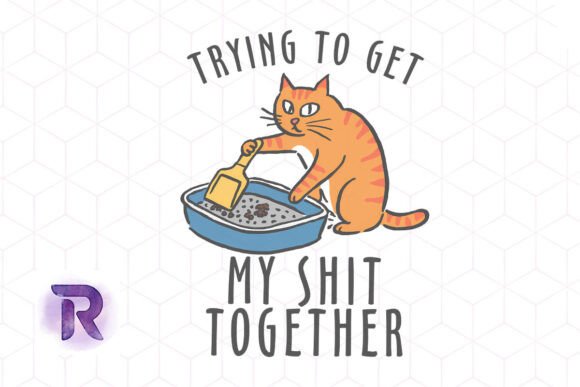
When I opened Trying to Get My Things Done Cat PNG, I didn’t see just another cat graphic—I saw a mood. A slightly weary, gently amused feline perched mid-task, paws on a notepad, tail curled like a quiet exclamation point. It’s not cartoonish or overly cutesy; it’s got personality without shouting. The line work is clean and intentional—no jagged edges, no pixelated fuzz—and the composition feels balanced for embroidery: centered weight, moderate height-to-width ratio, and breathing room around key elements like the cat’s ears and the notepad corners. As a designer who’s stitched hundreds of cat-themed pieces for Etsy sellers and boutique clients, I immediately thought: This belongs on a linen tea towel for a small shop owner’s holiday collection—or maybe an organic cotton baby onesie for a thoughtful, low-key newborn gift.
How It Stitches: Where This Design Truly Shines
I tested Trying to Get My Things Done Cat PNG as a machine embroidery design on a medium-weight cotton tote bag—my go-to real-world stress test. With proper tear-away stabilizer and 40-weight rayon thread, the outline held crispness, and the fill stitch areas (like the cat’s body and notepad) stayed smooth without puckering. The lettering in “Trying to Get My Things Done” is legible at 3.5 inches wide—not too thin, not too bold—and reads clearly even from across a craft fair booth.
It works especially well for:
- Custom apparel: Sweatshirt embroidery where subtle humor resonates—think relaxed-fit crewnecks for teachers or remote workers.
- Personalized gifts: Embroidered pillow covers for new moms (“I’m trying to get my things done… one nap at a time”) or kitchen towels for a friend launching their first baking business.
- Small shop product: As a stitched patch sewn onto denim aprons for a local café’s staff uniforms—professional but warm.
- Holiday embroidery: On lightweight flannel blankets for baby showers, where softness and sentiment matter more than flash.
The design avoids overcomplication—no tiny whiskers, no intricate shading—so it translates reliably across fabric types and hoop sizes common in home and small-batch commercial embroidery.
Where to Proceed with Thoughtful Care
That said, Trying to Get My Things Done Cat PNG isn’t universally forgiving—and that’s okay. Every strong design has its sweet spot. Use caution on:
- Stretchy fabric: Like jersey t-shirts or ribbed baby bodysuits—unless paired with cut-away stabilizer and reduced stitch density.
- Curved surfaces: Caps or beanies may distort the notepad’s straight lines unless digitized specifically for curve compensation (this PNG is a graphic, not a pre-digitized embroidery file—so confirm your digitizer adjusts accordingly).
- Dark or textured fabrics: The lighter gray tones in the cat’s fur and notepad can fade visually on charcoal fleece or burlap unless you boost contrast in your embroidery software or choose richer thread colors.
- Tiny hoops under 4x4 inches: The full composition needs space—the cat’s posture and text rely on proportion. For smaller applications, consider cropping just the cat’s head + “Done” as a standalone motif.
What It Adds to Your Finished Product—Beyond the Stitch
As a craft business owner or Etsy seller, you’re not just selling thread and fabric—you’re selling tone, intention, and relatability. Trying to Get My Things Done Cat PNG elevates handmade product perception because it feels *designed*, not assembled. Customers notice when lettering aligns cleanly, when stitch density supports clarity instead of muddying detail, and when the subject matter lands with sincerity—not sarcasm, not trend-chasing, but gentle recognition.
It builds trust: a parent buying embroidered baby items wants craftsmanship and calm energy—not visual noise. A boutique buyer choosing custom staff aprons wants cohesion with brand voice—friendly, capable, unhurried. This design delivers that quietly.
Practical Notes from the Embroidery Bench
Before stitching your first client order or listing a new product, take these steps:
- Test on scrap fabric—same type and weight as your final project—to assess pull, tension, and stabilizer performance.
- Check thread color contrast on both light and dark mockups. Try matte black thread on oatmeal linen, or heather gray on cream cotton—it changes the whole vibe.
- Review stitch density if digitizing yourself: avoid heavy fill in the notepad area unless using stable, tightly woven fabric.
- Confirm licensing before selling finished items or bundling into digital product kits—this is a Graphics asset intended for Crafts use, but commercial rights vary by seller.
- Use proper stabilizer: medium-weight cut-away for knits, tear-away for stable wovens, and fusible for lightweight linens.
- Inspect small details in your embroidery software—especially the spacing between letters and the curve of the tail tip. Tiny gaps can vanish in stitching if not adjusted.
Final Thought: A Design That Serves Its People
Trying to Get My Things Done Cat PNG doesn’t try to be everything. It’s focused. It’s kind. And in a market flooded with loud, fast, algorithm-optimized graphics, that focus is its strength. Whether you’re stitching a single personalized gift or scaling production for a seasonal craft business launch, this design supports your intent—not the other way around. It’s the kind of embroidery file that makes customers pause, smile, and say, “Yes—that’s exactly how I feel.” And in handmade work, that resonance is worth every careful stitch.