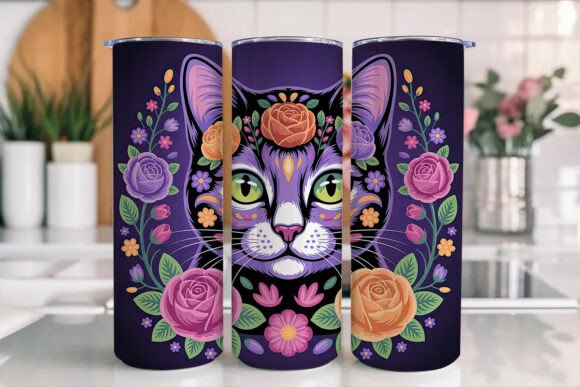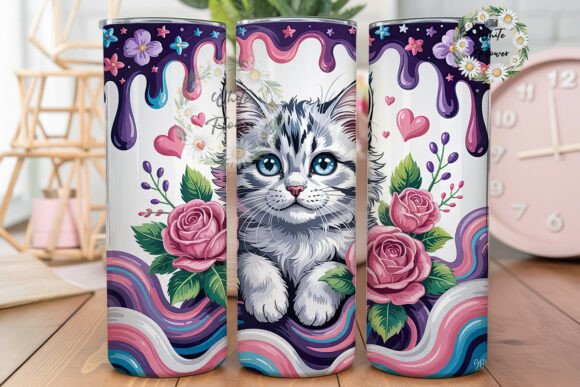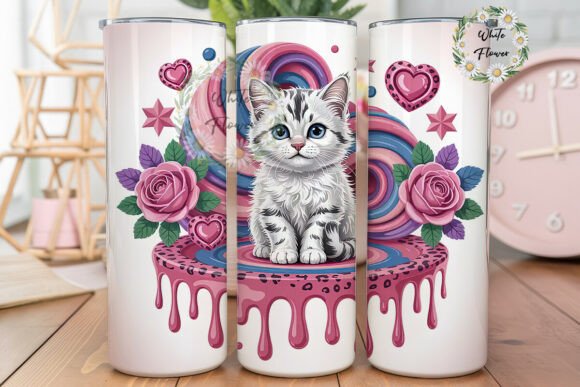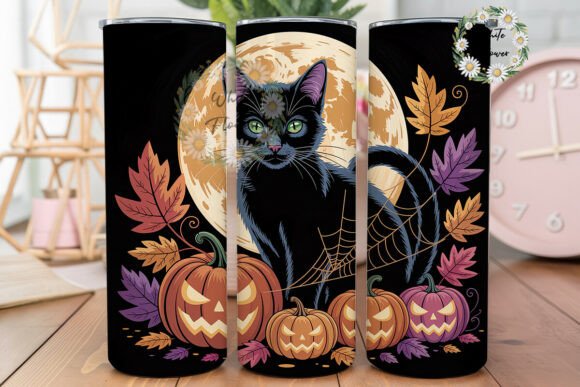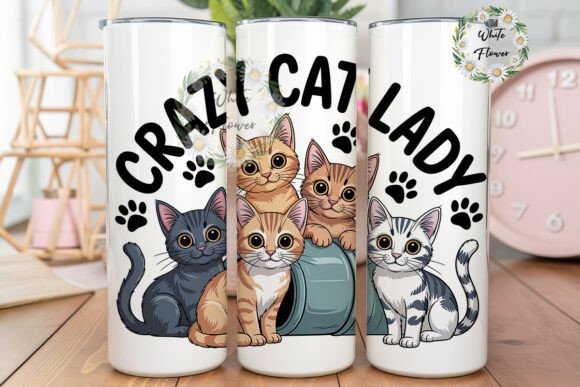
Crazy Cat Lady Tumbler
First Impression: Playful, Bold, and Instantly Recognizable
Opening the Crazy Cat Lady Tumbler files—straight and tapered PNGs—I immediately felt the energy. This isn’t a whisper of whimsy; it’s a confident, friendly shout. The composition balances bold outlines with expressive feline silhouettes and just enough illustrative detail (curled tails, paw prints, a tiny yarn ball) to feel handmade without sacrificing clarity. At 9.3 × 8.2 inches when sized correctly, it’s designed for impact—not subtlety. It lands somewhere between vintage charm and modern craft sensibility, making it ideal for products where personality matters more than polish.
A Real Project Test: Embroidering a Linen Tote for a Local Boutique
Last week, I prepped this design for a custom linen tote bag order from a neighborhood gift shop. Their customers love playful, unapologetically joyful pieces—and they expect durability. I used the straight version (not tapered) since the tote’s flat front panel had no contour. Before stitching, I resized it precisely in my image editor, confirmed it fit comfortably within my 5×7 hoop with breathing room, and ran a quick test on scrap linen with medium-weight cutaway stabilizer. The result? Crisp edges, balanced fill stitch density, and zero thread nesting—even around the tiny cat ears and whisker lines. Customers who saw the finished tote paused mid-aisle. That’s the sign of a design that works: it stops scrolling, invites touch, and feels authentically *made*.
Where Crazy Cat Lady Tumbler Shines—and Where It Needs Thought
This machine embroidery design excels on stable, medium-weight fabrics: cotton canvas totes, brushed cotton sweatshirts, denim aprons, and tea towels. Its clean line work translates beautifully into satin stitch borders and smooth fill areas—no jagged transitions or overworked corners. As an embroidered patch or pillow cover centerpiece, it reads clearly from three feet away. For Etsy sellers listing personalized gifts, it’s a strong anchor design: easy to pair with monogram initials or coordinating cat-themed motifs (think paw-print corner accents or simple “Meow” running-stitch banners).
But here’s where attention matters: avoid using Crazy Cat Lady Tumbler on highly textured fabrics like bouclé or thick terry cloth—the fine details can blur. On stretchy knits (e.g., baby onesies or lightweight tees), you’ll need excellent stabilization and possibly slight digitizing tweaks to prevent puckering. Dark fabrics demand high-contrast thread choices (ivory or pale gray instead of white); light fabrics benefit from rich, saturated threads (navy, forest green, deep rust) to hold visual weight. And while the tapered PNG is handy for curved surfaces like tumblers or caps, remember: real cap embroidery requires careful hooping and often reduced density to avoid stiffness—test it first.
What It Adds to Your Craft Business—Beyond Stitching
As a designer who reviews hundreds of digital embroidery files each year, I notice how much Crazy Cat Lady Tumbler contributes to perceived value. It doesn’t look mass-produced. Its hand-drawn rhythm and intentional asymmetry give finished products warmth and authenticity—critical for small shop owners building trust. When customers see this stitched on a kitchen towel or baby blanket, they don’t think “clip art.” They think “someone cared.” That impression directly supports pricing confidence, repeat orders, and word-of-mouth referrals.
For commercial embroidery projects—especially those sold online—it also performs well in printable mockups. The 300 DPI resolution ensures sharp previews on Etsy listings or Instagram carousels. No watermark means clean branding, and the lack of seamless tiling keeps focus exactly where it should be: on the central illustration. Just remember: as a Graphics product, it’s a design asset—not a ready-to-stitch embroidery file. You’ll need to digitize it yourself or hire a digitizer before actual machine use.
Practical Designer Notes You’ll Actually Use
- Always test first—on fabric identical to your final product, with the same stabilizer and thread colors.
- Check small details under magnification: are whiskers legible? Do paw prints read as shapes, not blobs?
- Review stitch density—especially in layered cat bodies or overlapping tails—to avoid stiffness or fabric distortion.
- Confirm licensing before selling finished items or reselling the design digitally. This is a Crafts category graphic, not an automatically licensed embroidery file.
- Try black-and-white mockups to assess contrast and silhouette strength—this design holds up well, but always verify.
- Compare light vs. dark backgrounds in your editing software. The tapered version may need minor adjustments for curved garment seams.
- Use proper stabilizer: medium cutaway for woven fabrics, tear-away + topping for napped or fuzzy surfaces.
Final Thought: A Design That Fits Real Life
Crazy Cat Lady Tumbler isn’t trying to be everything. It’s focused, fun, and functionally smart—built for makers who want their embroidery to spark joy *and* hold up to daily use. Whether you’re stitching holiday gifts for friends, launching a small batch of boutique sweatshirts, or creating a signature line of cat-themed nursery decor, this design carries personality without demanding perfection. It’s got heart, clarity, and quiet confidence—the kind of embroidery asset that makes your craft business feel less like work, and more like expression.