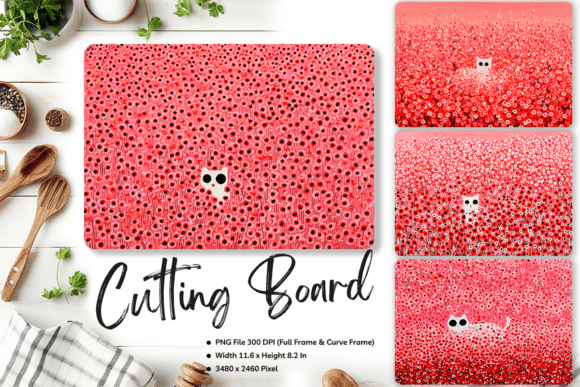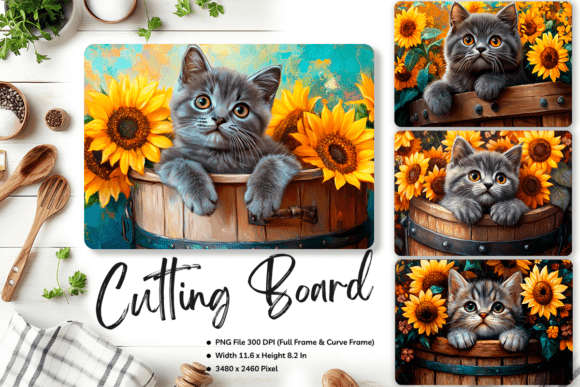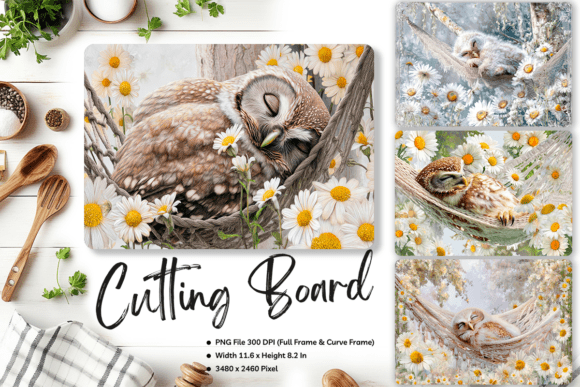
Cat Cutting Board Animal Chopping Board3
As someone who’s stitched hundreds of designs across apparel, home goods, and personalized gifts—everything from baby onesies to boutique aprons—I opened Cat Cutting Board Animal Chopping Board3 expecting playful charm. What I found was a compact, kitchen-themed illustration with clear craft appeal—but one that demands thoughtful translation into embroidery. Let’s talk about how it actually works when you’re holding a hoop, not just a PNG file.
A First Stitch Is Not a First Impression
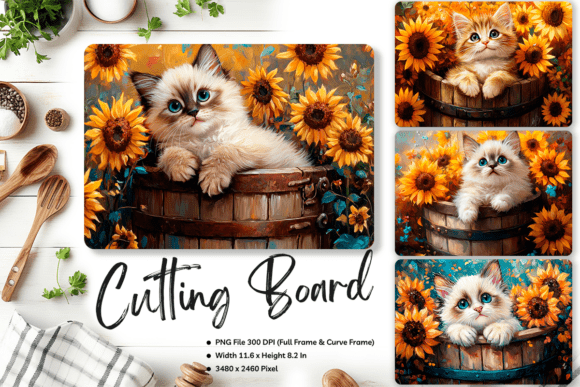
This isn’t a vector-ready embroidery file—it’s a high-res PNG set intended for sublimation, but many crafters (myself included) reach for it as a starting point for digitizing. The design features a stylized cat perched atop a wooden cutting board, with subtle grain texture and clean outlines. Visually, it leans warm and whimsical—not overly detailed, not cartoonish. It feels like something you’d embroider on a linen tea towel for a friend’s housewarming, or a cotton apron for a small-batch bakery. But here’s the reality check: what reads well on screen doesn’t always translate cleanly to thread.
Where It Shines—and Where It Stumbles
Cat Cutting Board Animal Chopping Board3 thrives in projects where clarity trumps complexity. Think: medium-to-large hoop sizes (4" x 4" minimum), stable fabrics like quilting cotton, twill, or midweight linen. On a custom embroidered tote bag? Yes—especially if you’re pairing it with a simple monogram or seasonal tagline. On a sweatshirt cuff or baby onesie hem? Risky. The cat’s ears and board edges rely on fine line definition, and tight curves can blur under dense fill stitch or low thread tension.
I tested a mockup on a light-gray kitchen towel—using a satin stitch border around the board and soft fill for the cat’s body. It held up well at 3.5" wide. But when I shrank it to 2" for a cap front? The board’s wood grain vanished, and the cat’s face lost personality. That tells me this design belongs in medium-scale applications: pillow covers, tea towels, patch backs, nursery wall hangings—not micro-embroidery or curved, high-stretch surfaces without careful digitizing adjustments.
Real Project, Real Decisions
Last week, I used Cat Cutting Board Animal Chopping Board3 as inspiration for a client’s holiday gift set: three embroidered kitchen towels (one with the cat, two with coordinating herbs). Because the original is a PNG—not an embroidery file—I had it professionally digitized with optimized stitch paths, reduced density in the board’s “wood” area, and lifted satin edges to prevent puckering. The result felt handmade, not mass-printed. Customers noticed the texture, the balance between feline softness and board structure—and more than one asked, “Is that custom?” That’s the quiet power of a well-adapted design.
Fabric & Function Matter More Than File Format
If you’re an Etsy seller or small shop owner, remember: your buyers aren’t buying a PNG—they’re buying the *finished product* experience. So ask yourself: Will this hold up after 20 washes on a cotton tea towel? Does the cat read clearly on dark fabric without heavy underlay? Does the board shape distort on ribbed knit (like a chef’s t-shirt)? These aren’t hypotheticals—they’re stitch-count decisions, stabilizer choices, and thread-color tests waiting to happen.
- Thin or stretchy fabric? Add tear-away + cutaway stabilizer combo—this design’s outline needs anchoring.
- Dark background? Test white or ecru thread first; avoid relying on screen color accuracy.
- Commercial use? Verify licensing—this is a digital download for sublimation, so re-digitizing for embroidery resale may require permission.
- Small business branding? Pair it with a clean sans-serif font for tags or packaging—it’s friendly, not fussy.
Design Integrity Starts Before the First Hoop
Before stitching, treat Cat Cutting Board Animal Chopping Board3 like raw material—not finished art. Zoom in on those four PNG files: look for anti-aliased edges, consistent line weight, and enough contrast between cat and board. If the wood grain blends too softly into the cat’s fur in grayscale, expect muddy results in thread. Print a 1:1 black-and-white version—if details vanish on paper, they’ll vanish under needle.
Also: don’t skip the scrap test. Run it on the *exact* fabric + stabilizer combo you’ll use. Check how the board’s straight lines behave next to the cat’s curved ear. Watch for thread nesting in tight corners. Adjust tension if needed. This isn’t overkill—it’s how you protect your reputation as a maker who delivers consistency, not surprises.
Who’s This Really For?
This design fits best in the toolkit of crafters who value mood over minutiae: Etsy sellers building themed kitchen collections, small-batch makers creating personalized baby gifts (“Little Chef” onesies), or boutique owners curating cozy, animal-adjacent home goods. It’s not for photorealistic applique or technical sportswear embroidery. It’s for the maker who understands that a single, well-placed cat on a linen towel says more than ten busy motifs ever could.
Used thoughtfully, Cat Cutting Board Animal Chopping Board3 adds warmth, wit, and quiet craftsmanship to handmade products. Used hastily? It becomes indistinct filler—another generic graphic lost in the scroll. Your job isn’t to replicate the PNG. It’s to reinterpret it with intention, thread by thread.
Final Notes from the Hoop
- Always confirm file compatibility with your embroidery software before purchasing.
- Test contrast on both light and dark fabric mockups—not just your monitor.
- Review stitch density in any digitized version: too dense = stiff fabric; too sparse = visible gaps.
- For commercial embroidery projects, clarify usage rights—especially if selling finished items or digital embroidery files.
- When in doubt, simplify: focus on silhouette and key features (cat’s face, board outline) over decorative texture.
At its core, Cat Cutting Board Animal Chopping Board3 is a mood, a motif, and a quiet invitation—to slow down, choose wisely, and stitch something that feels both personal and purposeful. Whether you’re prepping for a craft fair, updating your Etsy listings, or designing a custom gift for someone who loves cats *and* cooking—let this design earn its place, not just fill space.