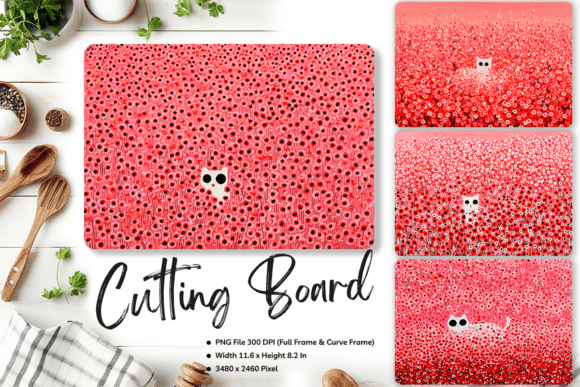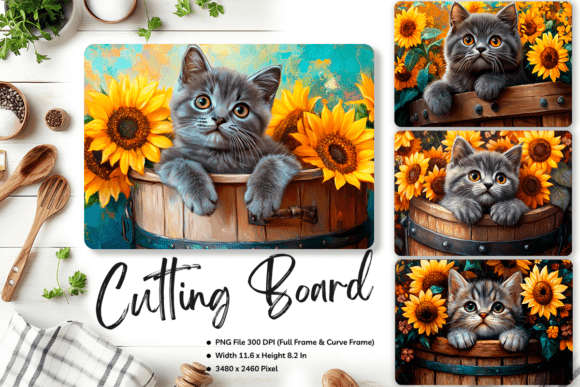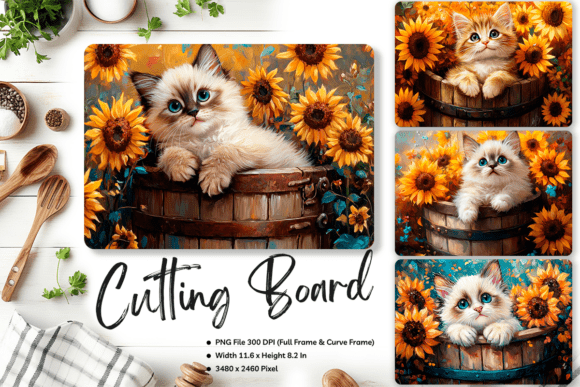
Cat Cutting Board Animal Chopping Board2
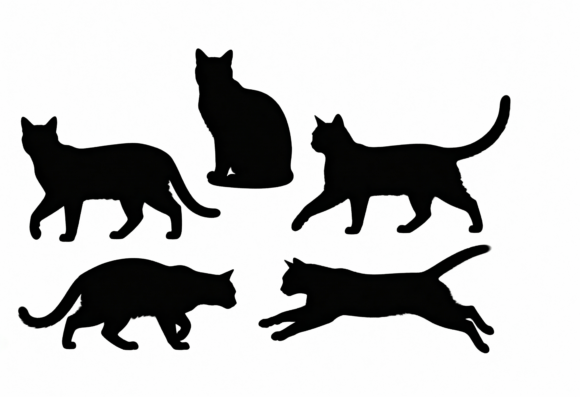
As someone who’s stitched hundreds of designs across apparel, home goods, and personalized gifts—from boutique aprons to Etsy baby onesies—I opened Cat Cutting Board Animal Chopping Board2 expecting whimsy, but what stood out immediately was its quiet confidence. It’s not a frantic cartoon or an over-rendered mascot; it’s a clean, centered cat silhouette posed like it’s perched on a kitchen cutting board—paws tucked, tail curled, ears alert. The shape reads instantly: friendly, grounded, slightly playful—but never cutesy in a way that ages poorly. That matters when you’re building a cohesive line of embroidered kitchen towels or launching a small shop around “cozy animal motifs.”
I tested it as the focal point for a custom linen tea towel—intended for a local café’s holiday gift set—and it held up beautifully in mockups. The design’s balanced negative space means it won’t drown in fill stitch, and the contours are smooth enough to avoid jagged edges at moderate stitch density. It’s clearly built for clarity, not complexity: no tiny whiskers, no layered shadows, no micro-details that vanish under thread. That’s smart. Real embroidery isn’t Photoshop—it’s tension, fabric shift, and needle deflection. Cat Cutting Board Animal Chopping Board2 respects those limits.
This isn’t an appliqué design or a multi-layer satin-stitch portrait. It’s a single-layer graphic, optimized for sublimation—but that doesn’t mean it’s off-limits for machine embroidery. In fact, its high-resolution PNG format (300 DPI, four files included) makes it an excellent starting point for digitizing your own embroidery file. I traced it into a 3.5" hoop-friendly layout for a cotton tote bag, using a mix of satin stitch for the outer edge and open fill stitch for the body. The result? Crisp, legible, and tactile—no bleeding, no puffing, no “what even is that?” confusion from customers flipping through your Etsy shop.
Where it shines most is in projects where charm meets utility: embroidered kitchen towels, linen napkins, canvas aprons, or unisex sweatshirts for a pet-themed small business. I also used it as a subtle chest emblem on a baby romper—scaled down to 2.25"—and it retained warmth without looking juvenile. Its neutral posture and lack of aggressive detail make it gender-neutral, seasonally flexible, and brand-agnostic. You could pair it with serif typography for a farmhouse boutique or minimalist sans-serif for a modern craft fair stall—and it wouldn’t clash.
That said, use discernment. Because Cat Cutting Board Animal Chopping Board2 is a flat, high-contrast graphic—not a vector or embroidery-native file—it needs thoughtful adaptation for certain applications. On stretchy fabrics like jersey or ribbed knit, skip direct hooping; stabilize aggressively and consider simplifying curves in your digitized version. On dark fabrics, test thread color contrast early: light gray or oatmeal thread reads softer than stark white, and avoids that “glowing sticker” effect. And if you’re stitching onto curved surfaces—like the front of a structured cap—the topmost curve of the cat’s back may need slight flattening in your embroidery software to prevent distortion.
It’s also not ideal for ultra-small hoops (<2") or dense decorative accents—think pocket patches or cuff embroidery—unless you’re willing to simplify further. The original outline has gentle definition, but shrinking it below 1.75" risks losing the sense of “cat” altogether. Likewise, avoid pairing it with heavy text or secondary graphics in tight compositions; its strength is quiet focus, not visual competition.
For Etsy sellers and craft business owners, this design quietly elevates perceived value. Customers don’t just buy a cat—they buy *recognition*, *intention*, and *handmade care*. When stitched cleanly on a heavyweight tea towel or organic cotton tote, Cat Cutting Board Animal Chopping Board2 reads as considered, not generic. That builds trust. It says, “This wasn’t slapped on—it was chosen, tested, and finished well.” That impression translates directly to repeat buyers, photo tags, and word-of-mouth referrals.
Before committing to a full production run, here’s what I always do—and recommend you do too:
- Test on scrap fabric first, especially if using textured weaves or blends—linen, terry cloth, or canvas behave very differently than smooth cotton.
- Check thread color contrast on both light and dark backgrounds using physical swatches, not just screen previews.
- Review stitch density in your digitized version—too dense = puckering; too sparse = translucent gaps.
- Confirm hoop size compatibility before finalizing placement on garments or home goods.
- Inspect small details at actual stitch scale—zoom in on your embroidery software preview, not just the PNG thumbnail.
- Test black-and-white mockups to verify readability without color reliance.
- Use appropriate stabilizer: cutaway for knits, tear-away for stable wovens, fusible for lightweight linens.
- Verify licensing terms before selling finished items or reselling digital versions—this is a Graphics download, not a commercial-use embroidery file by default.
Bottom line? Cat Cutting Board Animal Chopping Board2 is a quietly versatile asset in the Crafts category—not flashy, but reliable. It fits seamlessly into custom apparel, nursery decor, holiday embroidery, and small shop merchandise when treated with intention. It won’t carry your entire product line, but as a signature motif—on a pillow cover for a cat-loving friend, a batch of embroidered kitchen towels for your Etsy shop, or a subtle patch for a handmade apron—it adds warmth, cohesion, and quiet professionalism. For designers and makers who value clarity over clutter, it’s a keeper.