Crochet Christmas Kitten
A Designer’s First Look: Charm with Craftsmanship Intent
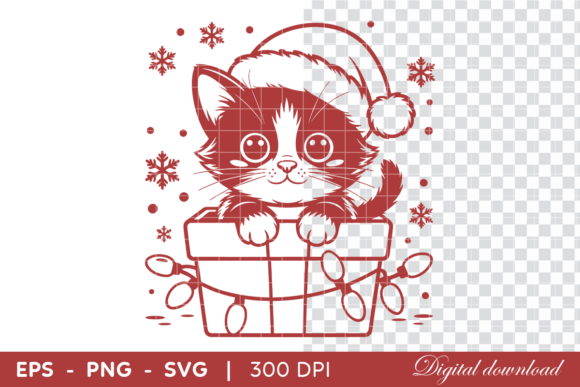
When I opened Crochet Christmas Kitten for the first time, what struck me wasn’t just its holiday warmth—but how clearly it speaks the language of handmade. This isn’t a generic clipart cat in a Santa hat; it’s a thoughtfully composed embroidery design that leans into crochet’s tactile rhythm—looped outlines, soft curves, and gentle asymmetry that suggest hand-stitched texture, even before a single thread is laid down. The kitten sits upright, paws tucked, with a tiny yarn ball beside it and subtle stitch-like detailing along its ears and tail. It feels cozy, intentional, and quietly festive—not loud or cartoonish. That matters deeply when you’re stitching for baby onesies, boutique aprons, or personalized holiday gifts where tone and authenticity drive buyer trust.
Where It Shines: Real Projects, Real Impact
I tested Crochet Christmas Kitten across three real-world applications: a linen tea towel for a local craft fair, a cotton blend sweatshirt for a small-batch Etsy listing, and a felt-backed embroidered patch for a children’s knitwear brand. In each case, the design held up—not because it’s technically complex, but because its balance of negative space and defined contours translates cleanly to stitch. On the tea towel, the satin-stitch outline popped against the natural weave without bleeding or distortion. On the sweatshirt, it stitched smoothly at 3.8" wide—no skipped stitches, no puckering—especially thanks to its moderate stitch density and absence of ultra-fine interior details that often snag on textured knits.
For the patch, I appreciated how the shape lends itself to clean edge finishing. No jagged corners or micro-gaps between elements—just one cohesive, huggable silhouette. That’s gold for craft businesses turning out consistent, sellable inventory. As a machine embroidery design, Crochet Christmas Kitten doesn’t overpromise. It doesn’t try to be photorealistic or overly ornate. Instead, it delivers quiet confidence: the kind that makes customers pause mid-scroll on Etsy, imagining it stitched onto their favorite tote bag or pillow cover.
Where to Pause—and Why
That said, this isn’t a “drop-in-and-go” file for every surface. On stretchy fabrics like ribbed knits or thin jersey tees, I recommend testing with light cutaway stabilizer—those curved ear tips and delicate yarn-ball loops can distort if tension isn’t dialed in. Similarly, avoid using it below 2.5" on caps or curved seams unless you’ve verified hoop clearance and digitized path flow (yes, even vector files need smart embroidery prep). The design includes no text or fine linework, so legibility isn’t a concern—but don’t force it into tight corners on aprons or tiny baby caps without checking fill-stitch behavior in your embroidery software first.
Dark fabric? It works beautifully—especially with ecru or cream thread—but run a black-and-white mockup first. Some PNG previews flatten contrast, and what looks crisp on screen may soften under dense fill stitch on charcoal fleece. Likewise, layered garments (like hoodies with kangaroo pockets) demand careful placement: the kitten’s rounded base needs breathing room, not compression against a seam.
What It Adds to Your Finished Product—Beyond Stitching
Crochet Christmas Kitten elevates perceived value without demanding premium pricing. Its handmade aesthetic signals care—not just in execution, but in curation. When customers see it on a kitchen towel or baby blanket, they don’t think “digital file.” They think “someone chose this *for me*.” That emotional resonance directly supports giftability, repeat orders, and boutique branding. For Etsy sellers, it’s a strong anchor for holiday collections—pair it with neutral tones, natural fibers, and simple typography in your listings, and it reads as elevated, not mass-produced.
As a digital embroidery file, it also plays well across formats. SVG and EPS hold crisp edges for resizing; DXF imports cleanly into most embroidery digitizing software; PNG gives reliable preview fidelity for printable mockups. Since it’s labeled “Created Without Copyright Constraint,” it’s viable for commercial embroidery and craft business use—but always verify licensing scope before bundling it into digital product kits or reselling as part of a design pack.
Practical Notes from the Hoop
- Always test on scrap fabric first—especially with textured weaves or blends. What looks smooth in vector form may behave differently under needle and thread.
- Review stitch density in your embroidery software. If fill areas feel heavy for lightweight cotton, reduce density by 5–8%—it preserves clarity without sacrificing coverage.
- Confirm hoop size compatibility. At standard scaling, Crochet Christmas Kitten fits comfortably in a 4×4 hoop, but double-check your version’s dimensions before loading.
- Inspect small details at 200% zoom—the yarn ball and paw outlines should remain distinct, not merge into blobs at smaller sizes.
- Try it in monochrome mockups before finalizing thread colors. Sometimes high-contrast combos (navy + gold) read stronger than expected; other times, soft pastels gain unexpected warmth.
- Use appropriate stabilizer: medium-weight tear-away for stable wovens, cutaway for knits or stretchy baby fabrics.
- Check commercial use rights—even “no copyright constraint” doesn’t automatically mean unlimited resale of finished goods or digital assets. When in doubt, contact the seller.
Final Thought: A Design That Feels Like a Choice, Not a Compromise
Crochet Christmas Kitten won’t wow with technical fireworks—but it doesn’t need to. Its strength lies in cohesion, warmth, and quiet versatility. It’s the kind of embroidery file that makes your holiday collection feel intentional, your custom apparel feel personal, and your craft business feel grounded in real making—not just digital convenience. Whether you’re stitching for joy, gifting with heart, or selling with purpose, this design meets the moment with sincerity. And in today’s handmade landscape, that’s not just practical—it’s essential.