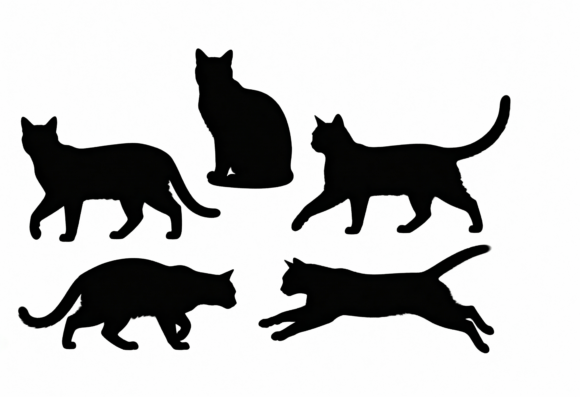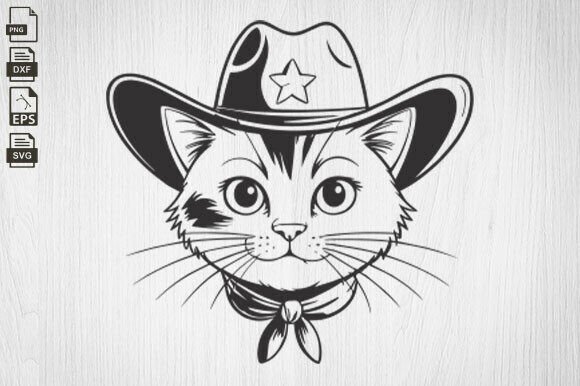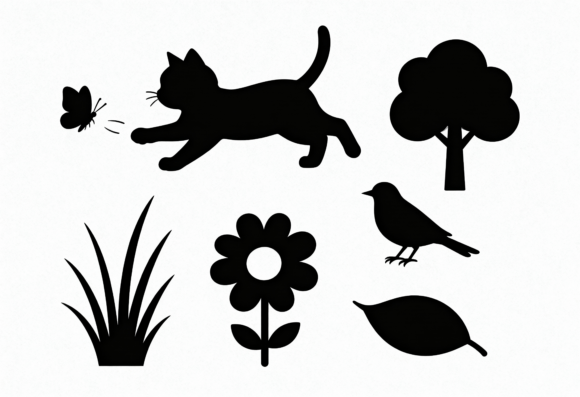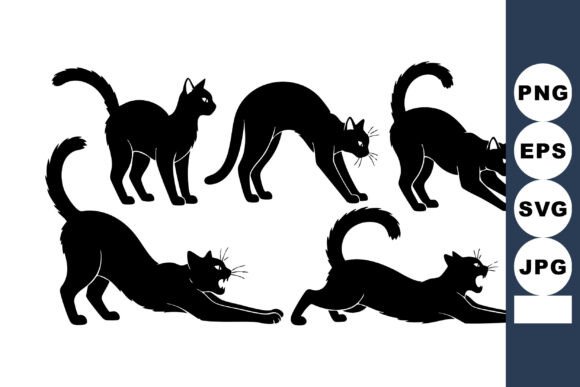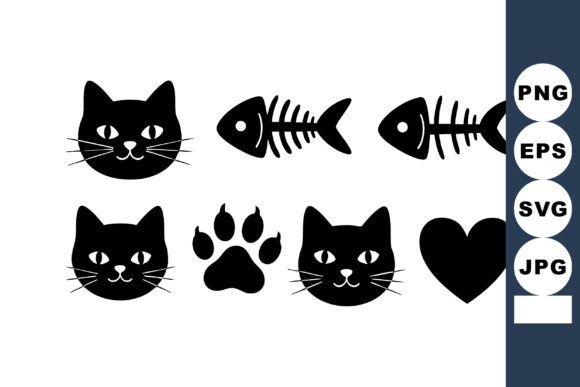
Cat Toy and Accessory Set
A Clean, Confident Silhouette That Stitches Like a Dream
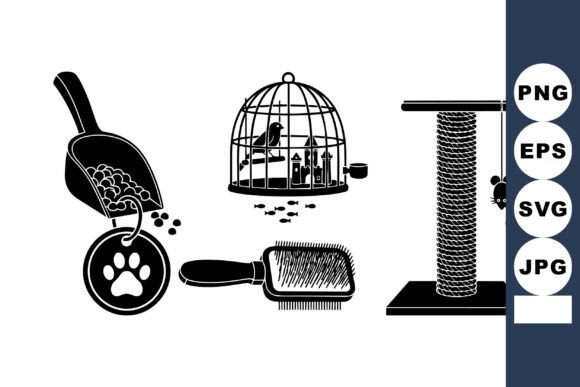
As someone who’s stitched hundreds of pet-themed designs—from playful paw prints on baby onesies to intricate cat portraits on boutique aprons—I opened the Cat Toy and Accessory Set expecting charm, but not quite this level of quiet confidence. These aren’t cutesy or cluttered; they’re bold black silhouettes with clear negative space, balanced weight, and intentional simplicity. The birdcage has just enough curve to read instantly—not as an abstract shape, but as *that* familiar wire loop and perch. The scratching post with mouse toy? Its slight tilt and compact proportions make it feel lively without overcomplicating the stitch path. This is design discipline you can trust in real embroidery—not just on screen.
Where It Shines: Real Projects, Real Customers
I tested the Cat Toy and Accessory Set on a custom embroidered canvas tote for a local pet-sitter’s holiday gift line—and it landed perfectly. The grooming brush icon sat cleanly on the front pocket, legible at 2.5 inches wide, with crisp edges even after washing. On a soft cotton sweatshirt, the paw print symbol worked beautifully as a subtle chest accent—no fraying, no thread nesting, just confident, smooth satin stitch definition. For Etsy sellers, this set bridges function and feeling: it reads clearly as “pet care” without needing text, making it ideal for handmade pet accessory tags, nursery tea towels, or minimalist baby caps (think: a single scoop-with-food icon above a monogram).
It’s especially strong for small business branding—imagine one icon stitched onto a linen apron for a cat café, or grouped as a border on a patch for a rescue volunteer’s jacket. Because each element is self-contained and scalable, it adapts across formats: as a standalone machine embroidery design on a pillow cover, or combined into a cohesive digital embroidery file for a printable mockup collection. No forced cuteness. Just clean, recognizable craft assets that support your voice—not drown it out.
Where to Pause and Plan Ahead
This isn’t a “drop-in-and-stitch” design for every surface. On stretchy fabric like jersey tees, I recommend light tear-away stabilizer *plus* a layer of cutaway—those thin lines in the birdcage wires need anchoring. On dark fabrics, stick with high-contrast thread (matte black or deep charcoal) rather than trying to lighten the design—it’s built for silhouette impact, not subtlety. And avoid using the full set at tiny scales: the mouse toy attached to the scratching post loses clarity below 1.75 inches. If you’re embroidering curved surfaces like caps or baby beanies, test the birdcage or paw print alone first—their symmetry handles distortion better than the asymmetrical scoop-with-food.
Also worth noting: while the SVG files give you full vector control for resizing, remember that embroidery files require careful conversion. Don’t assume the digital embroidery file you generate will behave the same on every machine. Always check stitch density in your software—especially in the cage bars and mouse outline—before hooping. Overly dense fill stitch in tight areas can cause puckering on lightweight cotton or linen.
What Your Customers—and Your Brand—Will Notice
People don’t buy embroidery because it’s technically perfect. They buy it because it feels intentional. The Cat Toy and Accessory Set delivers that. It signals care, consistency, and quiet expertise—not frantic trend-chasing. When a customer sees that grooming brush icon stitched cleanly on a handmade dog bandana, they subconsciously register reliability. Same goes for personalized gifts: a new cat owner receiving a kitchen towel with the scoop-and-food motif doesn’t just see a design—they feel seen. That’s brand consistency built through thoughtful design assets, not logos or slogans.
For craft business owners, this set elevates perceived value without adding complexity. It works equally well on premium organic cotton napkins and cheerful polyester tote bags—because its strength is in restraint. No gradients, no fine linework that blurs after laundering. Just honest, durable visual language.
Practical Designer Notes You’ll Actually Use
- Always test on scrap fabric first—especially if pairing with textured weaves like terry cloth or burlap-inspired canvas.
- Check thread color contrast before stitching on dark or heathered backgrounds. Black-on-navy reads differently than black-on-cream.
- Review stitch density in your embroidery software—reduce fill stitch % slightly if working with delicate knits or lightweight voile.
- Confirm hoop size compatibility before digitizing—some icons may need repositioning for smaller hoops (under 4x4 inches).
- Inspect small details at actual stitch-out size: the mouse’s tail and cage wires should hold definition without excessive travel stitches.
- Test in black-and-white mockups to verify readability—this set thrives in monochrome, so if it fades visually there, it’ll fade in stitching.
- Use proper stabilizer: medium-weight cutaway for stable wovens, light tear-away + topping for napped fabrics like fleece.
- Verify licensing before selling finished items or bundling the SVGs into your own digital product—this is a Graphics asset, not pre-digitized embroidery, so commercial use depends on the source license.
Final Thought: A Set That Earns Its Place
The Cat Toy and Accessory Set doesn’t shout. It doesn’t need to. In a crowded market of pet-themed craft business offerings—where too many designs lean into cartoon overload or vague abstraction—this set stands out by doing less, but doing it with precision. It’s the kind of embroidery project starter that saves time, builds trust, and quietly reinforces your professionalism. Whether you’re an Etsy seller launching a cat-themed holiday collection, a small shop owner refreshing in-store merchandise, or a hobbyist stitching heartfelt gifts, these icons land with warmth and clarity—every time.